

More than community gardens: How urban farming is expanding in Indiana
As more Indiana residents move to cities and suburbs, they have found ways to stay connected to agriculture — raising chickens, growing small pots of tomatoes and contributing to community-managed gardens in their new settings. Purdue Extension agriculture and natural resources (ANR) educators are researching new ways to support residents and discovering how they can work to improve community health, resilience and connection.
Northwest Indiana
Lake County contains multiple cities, including Gary, Hammond and Crown Point, alongside densely populated towns. Although 347 farms were recorded in the 2022 Census of Agriculture, many northwest Indiana residents have little connection to farming.
Local 4-H youth development staff are seeking to change that through the 4-H Urban Agriculture program. The program offers youth hands-on workshops, opportunities to plant and grow herbs, cooking skill lessons, and trips to local urban farms to see how food is grown and shared.
“The 4-H Urban Ag program is a new project that we started last year and intentionally designed to engage both new and current 4-H audiences,” said Julie Jones, 4-H educator and county Extension director. “We want to reach youth who may not have seen themselves in 4-H before, while giving returning 4-H members a chance to explore something new.”
ANR educator Rebecca Koetz supports 4-H youth education through working alongside schools to introduce students to agriculture. For example, Koetz has worked closely with Harrison Elementary School in East Chicago to teach seed starting and support a school garden.
“The goal is that the older students are teaching the younger students, and we're not needed as much,” Koetz said. “We also want families to be engaged, providing potting mix, seeds, compost and other resources the garden needs every year.”
 Students at the Gary West Side Leadership Academy prepare beds for spring planting with guidance from 4-H program assistant Lynda Bodie.
  Lake County 4-H Urban Ag members toured Faith Farms and Orchard, an urban farm located in a city neighborhood in Gary, Indiana, that produces tens of thousands of pounds of fresh food annually while providing education, job training and access to healthy foods.
 Koetz also teaches programs for adults who are already involved in farming or want to start a new operation. She often teaches about the business side of agriculture, but permaculture has increasingly become a part of her work.
“Permaculture involves mimicking ecological systems and working with the land and resources you have on site. It’s a lens we can use to solve problems without bringing in a lot of external resources,” Koetz said. This approach to design also considers how agricultural design impacts communities, which Koetz says are at the heart of urban agriculture.
“It’s all about creating sustainable local food systems. I’m here to connect people with resources and each other, building community and providing programming for people,” she explained.
Central Indiana
Marion County, where Indianapolis is located, has proven to be the perfect place for urban agriculture. ANR educator Jayde Grisham has spent two years in Marion County and spent much of that time sharing niche agriculture opportunities.
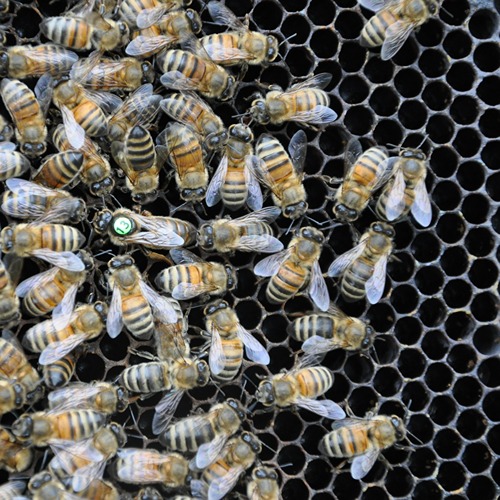
“Because land in urban areas is expensive, agriculture in urban areas is expensive,” Grisham explained. Quail, beekeeping and cut flowers are examples that offer opportunities for producing food or additional income with only a little land.
“In my front yard, I have a little flower farm next to my bees and my quail,” Grisham said. “It’s an adventure. Every year I've been with Extension, I do research and add different things to my plate that interest me.”

 Growing cut flowers can provide additional income to urban farmers, who can sell the flowers at farmers markets.
Exploring niche agriculture can increase revenue paths for urban farmers and create new opportunities for education and connection. For example, Grisham met a local beekeeper and was able to turn his interest into something that benefitted the community.
“The beekeeper wanted to expand his apiary and add more hives, but he didn’t have the land for it. I was able to reach out to a local community garden and say, ‘Could this beekeeper put some hives on your property? It might help your crops.’ Then we worked out a deal where they could sell the honey, and he could take a little bit of the profit. Now he’s expanded from the community garden to other gardens and urban farms,” Grisham said.
She hopes that her research and the free, virtual “Lunch and Learn” sessions she hosts will bring more people together. “Urban gardening is not about the food; it's about the people.”
Northeast Indiana
Fort Wayne is Indiana’s second largest city and part of Allen County, which has 1,497 farms, coming second among Indiana counties. ANR educator Cora Hill spends much of her time trying to connect these two worlds, and her favorite place to do this is Johnnie Mae Farm, which is managed by Purdue Extension.
“I really enjoy giving tours because of how I can show people the different ways you can grow your own plants and food, regardless of where you live,” Hill said. “I also like having programs out there because there's a garden and a kitchen. It's a way to show people how everything connects.”
 Johnnie Mae Farm was originally a fire station before it became a community garden and gathering spot. (Tom Campbell)
  Youth at the “Plant, Pick, Plate” program learn how to prepare vegetables for different meals.
  Community members can buy the produce grown in Johnnie Mae Farm’s gardens, providing greater access to fresh, affordable produce.
 “We have a program called ‘Plant, Pick, Plate’ for kids that we partner with the Dream Center for, which is a local organization,” Hill said. “We do gardening and cooking classes to teach kids about growing a garden and preparing healthy food. A lot of times their parents sit in too, so they also can learn from the program.”
 , opens larger image Extension staff and volunteers help to grow and harvest the produce grown on Johnnie Mae Farm. (Tom Campbell)
 Other partnerships have focused on support for school-age children, adults with disabilities and currently or formerly incarcerated people.
There's always more we can explore because what I do is a newer thing. When people think about agriculture, they think rural, but urban agriculture has a lot of great things too. I’m so excited to keep learning more and keep introducing more programs.”
- Cora Hill, agriculture and natural resources educator
Featured Stories
Extension educator Heidi Potter has learned that flying drones is easy when you have the right...
The Purdue Small Farm Education Field Day on July 23, co-hosted by the Department of Horticulture...
Purdue University’s Department of Horticulture and Landscape Architecture and Purdue...
Unsure what to make for dinner, you check your kitchen. A loaf of bread. A bag of baby carrots. A...
Small but mighty, pollinators contribute to everything from aster to apples to almond butter....