

UAV trainings take careers, learning to new heights
Extension educator Heidi Potter has learned that flying drones is easy when you have the right training.
“Before I came to Extension as an agriculture and natural resources educator, I was a full-time farmer, and I was not into technology at all. I was a little bit reluctant to learn something that felt like advanced technology,” Potter said. “But the technology itself is very common sense and user-friendly, and that drew me in.”
Potter is now one of many educators who lead UAV (unmanned aerial vehicle) programs for farmers, youth and local companies interested in expanding their skills.
Advancing agriculture
To operate UAVs commercially, you must pass the Federal Aviation Administration’s Part 107 Remote Pilot Knowledge Test. The agriculture and natural resources (ANR) UAV Training Program prepares attendees for the exam and offers hands-on experience with manual and planned UAV flights. About 95% of Extension’s participants pass the test on their first try.
In row crop farming, the original focus of the UAV program, drones help scout fields for problems, monitor plant growth and apply fertilizers and other liquids. Drones can also turn into additional income if a farmer offers these services to others.
“There are so many ways you can use drones,” Potter said. “I'm eager to see them being used more widely to benefit other sectors of agriculture too, like forestry, sod operations and diversified farms.”
These trainings are offered by Purdue University’s Institute for Digital and Advanced Agricultural Systems to ensure all Indiana farmers have access to education about digital agriculture tools.
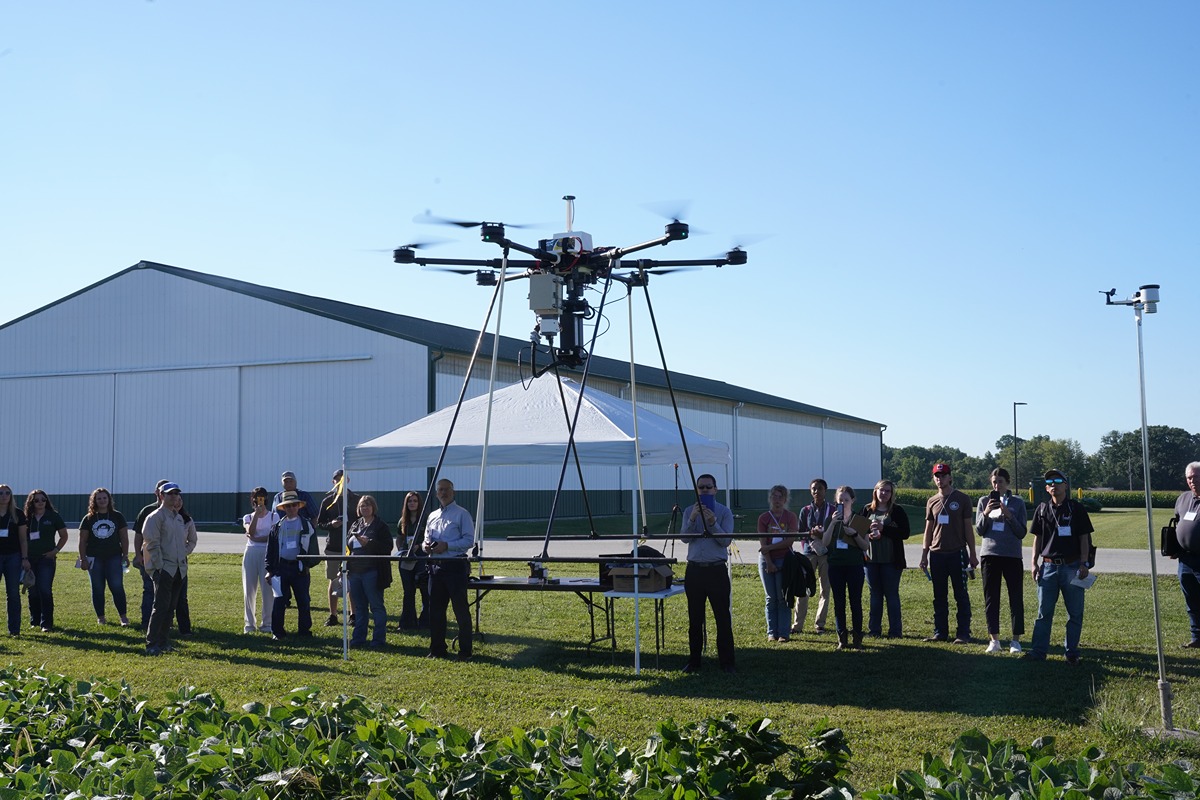 Participants at a digital agriculture showcase watch a drone demonstration. (Tom Campbell)
 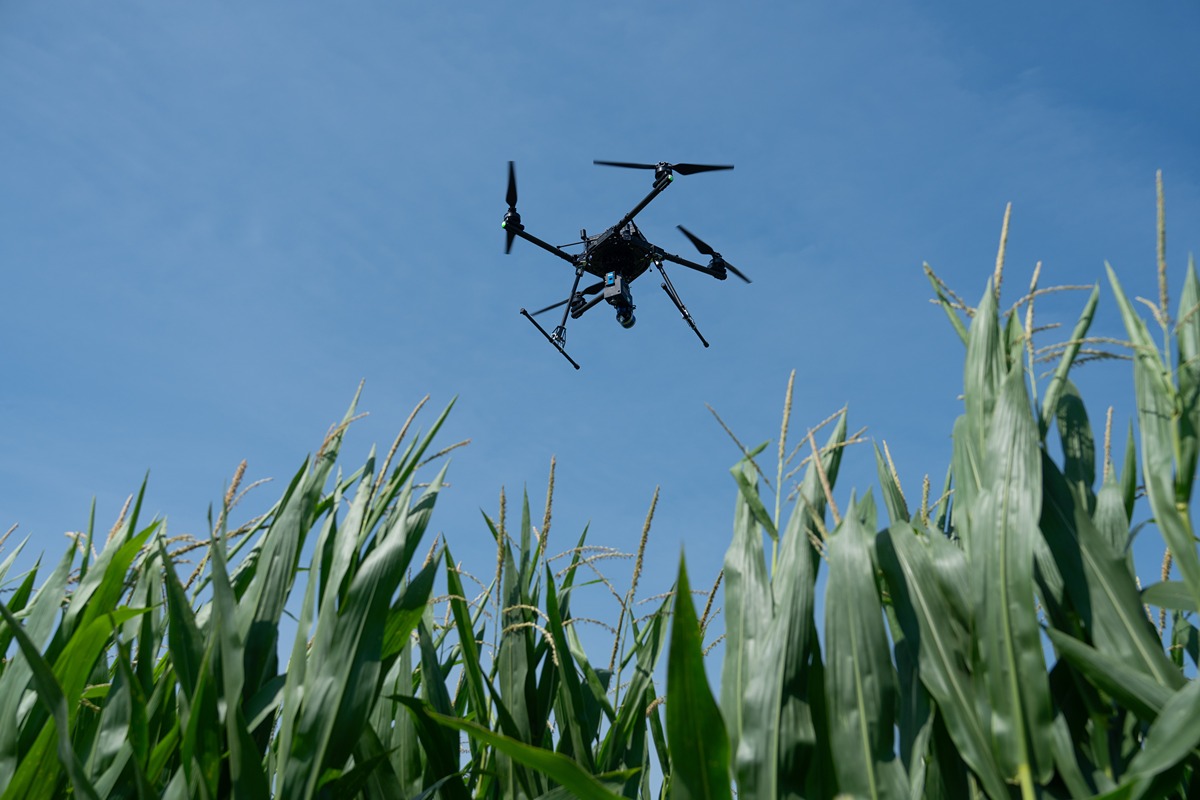 A drone scouts a corn field at the Indiana Corn and Soybean Innovation Center. (Joshua Clark)
 Building STEM skills in youth
Extension also offers UAV demonstrations and trainings for youth through activities like ag days, classroom visits, 4-H programming and statewide UAV competitions. These programs give youth hands-on experiences with drones and the tools to pursue a career in science, technology, engineering or math (STEM).
School demonstrations
Bill Decker, who leads statewide 4-H Discovery programs, started teaching youth about UAVs almost five years ago.
“My second day on the job, an ANR educator did a drone demonstration for a regional 4-H camp,” Decker said. “I was assigned to help kids fly small Tello drones. I used to be a private pilot, so I thought it was a cool program. There weren't a lot of people doing UAV work in 4-H then, so I went out and bought some drones and started doing programs around Madison County. I heard it might be hard to get the program into classrooms, but I was being invited to more schools than I could go to.”
Much like the adult UAV classes, classroom demonstrations use hands-on learning to show STEM concepts in action, such as how drones take off, turn and hover and how to use coding to plan a flight path. Educators also introduce students to careers related to UAVs and how they can obtain an FFA 107 license at 16 years old.
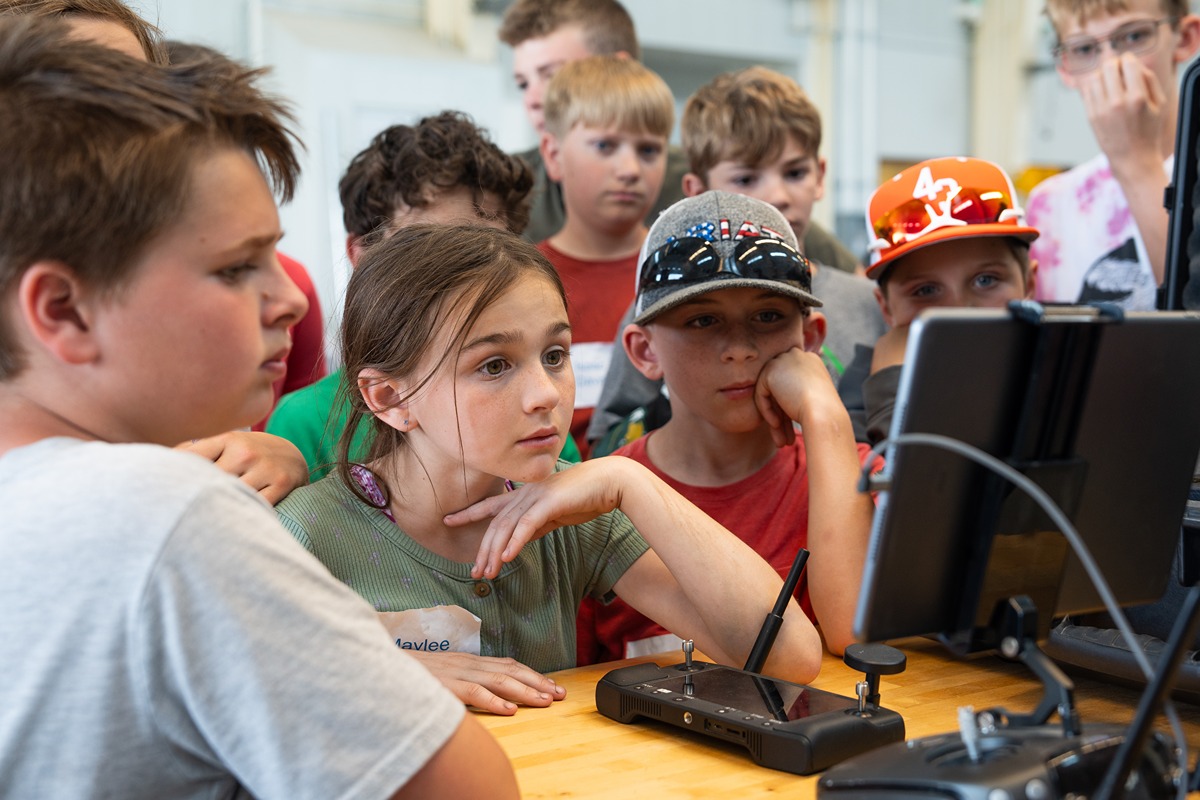 Youth at Experience 4-H: Crop and Soil Science, a one-day event, learn how a drone controller works. (Joshua Clark)
 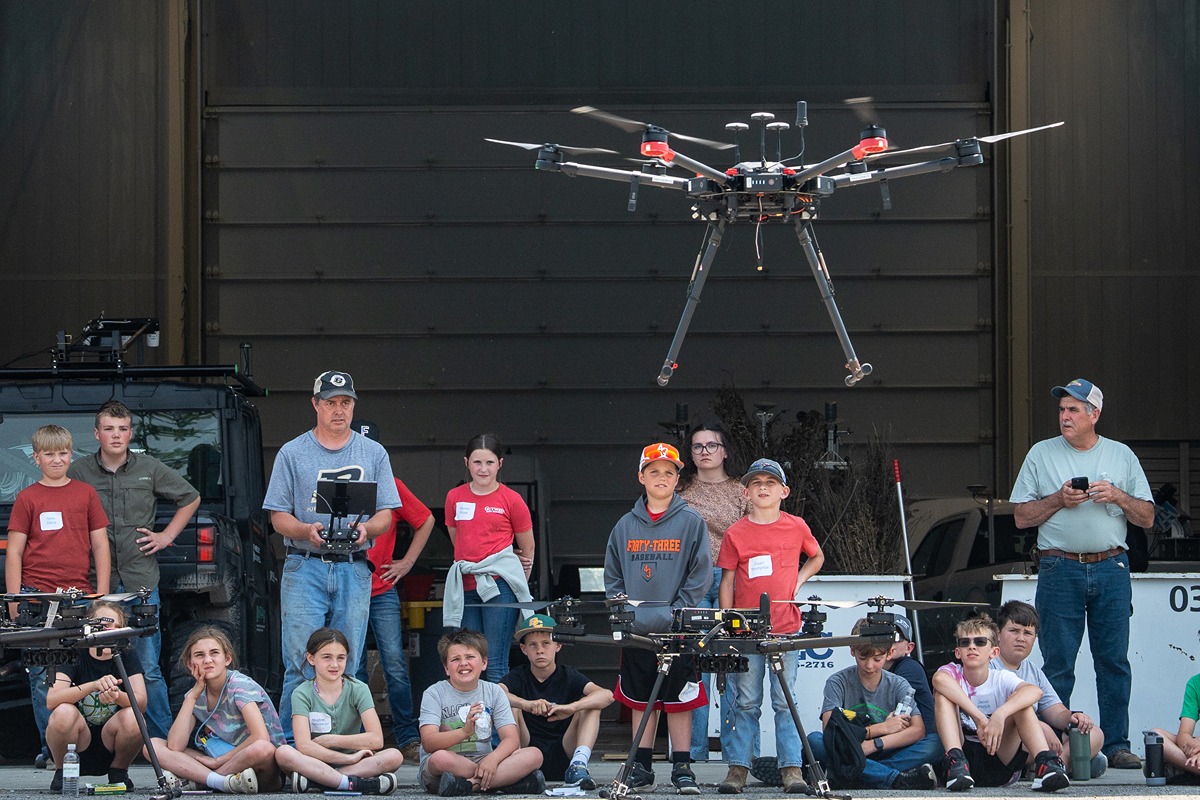 Youth learn about the science and technology behind drone flight. (Joshua Clark)
 Decker’s favorite part of the presentation is when students get to fly the drones for the first time. “When you go through the line of kids, some of them will refuse to fly, and I’m like, ‘Okay, you don't have to but just watch everybody else.’ Then they’ll come back up in the line and want to give it a try. Usually, they do a really good job of flying and landing it. That’s when their faces light up, when they’ve accomplished something that they didn't think they could do.”
4-H programs
Over the last five years, stand-alone youth drone demonstrations have expanded across the state and spurred the creation of multi-week 4-H programs. These programs offer opportunities for students to grow their understanding of coding, problem solving and the physics of flying.
Lynda Bodie-Fernandez, 4-H program assistant, and Kasey Wilhoit, the 4-H youth development educator for Lake County, help run a drone education program at Gary West Side Leadership Academy. The program, which initially came out of a partnership with the College of Education, meets twice a week to teach students basic flying skills, drone operations and programming. The new program has attracted 13 students so far, all of whom are new to 4-H.
Thanks to statewide support from the Indiana 4-H Foundation, which awarded the group $1,000 in STEM program enrichment funds, the group was able to provide better program supplies and transportation to the statewide 4-H UAV/Drone competition. With continued community support, other 4-H hopes to continue offering and expanding youth drone education across Indiana.
Statewide competitions
In March, youth from across the state gathered to compete in the 4-H UAV/Drone Competition hosted at the Madison County Fairgrounds. It was the third year the northern Indiana competition took place, and the first year that a second competition was hosted in Bartholomew County, which is south of Indianapolis.
Participants in grades 5 through 12 showed their skills through a drone obstacle course, a coding test and an exam that mirrors the FAA 107 license exam. About 50 students participated this year.
Decker hopes the experience will encourage more youth to get their FFA 107 license and continue exploring coding and STEM.
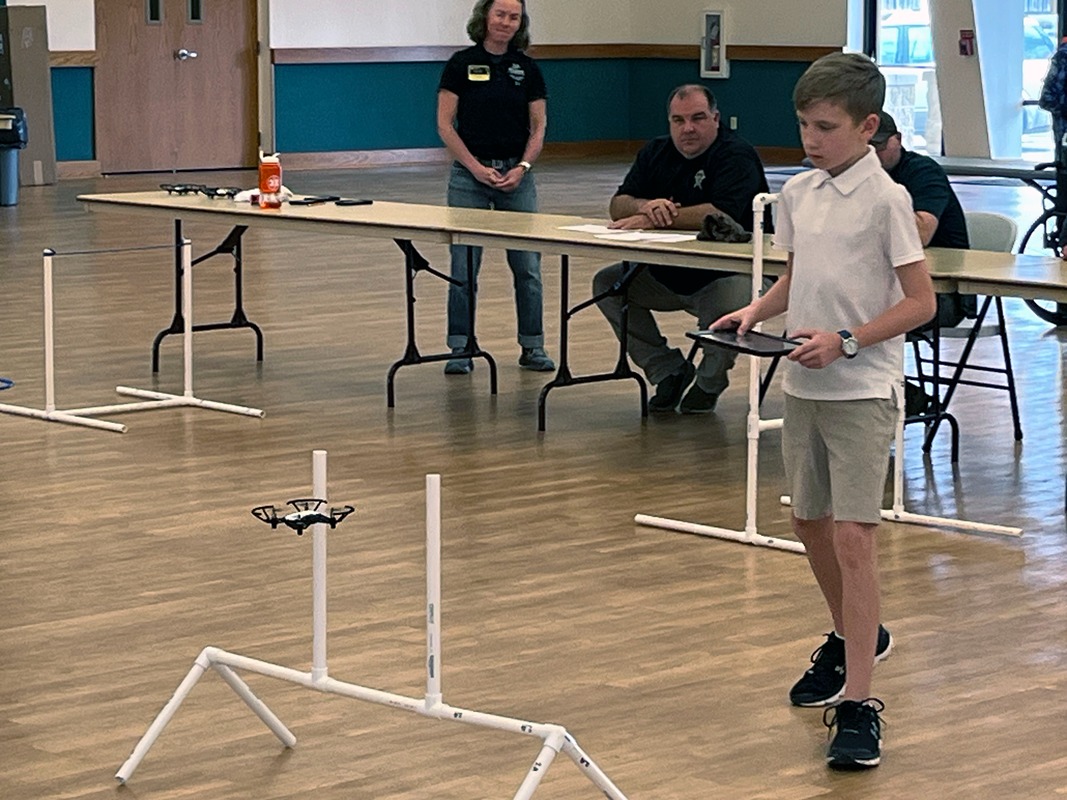 A participant from the 2025 UAV/Drone competition navigates a drone through an obstacle course. (Photo provided)
 Expanding to meet community needs
Potter and Decker have seen interest in drones continue to grow in communities, and the UAV program has expanded well beyond its initial audience.
While we are still reaching farmers with the UAV class, we are reaching a lot of other sectors too, like utilities, first responders and real estate. We bring an assortment of drones so people can get hands-on experience that you can't get from an online course. The person in marketing is looking for something different than the fire department, but they all get to fly those drones and decide what's the best fit for them.
- Heidi Potter, agriculture & natural resources educator
Decker looks forward to future collaboration with ANR educators to expand programming that lets youth and adults explore how UAVs can fit within their career goals.
“We're very fortunate that Purdue and Extension support digital agriculture and that it’s been a priority for Extension,” Potter said. “The work is relevant to the communities we serve, and I look forward to sharing it with others.”