

Berry breakthroughs: Purdue Extension provides support for Indiana’s strawberry producers
Collaborative research, community roots and innovative solutions drive local grower success
With fresh, flavorful strawberries in high demand across Indiana so are Purdue Extension specialists. Through research and hands-on guidance, Extension specialists, like Wenjing Guan, a horticulture and landscape architecture clinical engagement associate professor, help strawberry farmers statewide exceed customer expectations.
Guan notes that locally-grown strawberry demand across the state has surged. "Locally grown strawberries are valued because consumers notice their freshness and flavor compared to those shipped long distances. Many are willing to pay premium prices. Strawberries are also versatile and can fit various production systems based on a farm’s resources and goals," she said.
Berries and breakthroughs
Extension specialists like Guan support farmers through research on cultivar selection, production systems, pest management and more. Guan has scaled strawberry farming through plasticulture, a method that involves growing strawberries on raised beds covered with plastic mulch. Working with Stephen Meyers, associate professor in horticulture and landscape architecture, they discovered that production practices widely used in the southern United States needed to be adapted to Indiana conditions and tailored to the goals and growing environments of individual farms.
"The Indiana Specialty Crop Block Grant, led by Stephen Meyers, evaluated a modified approach in which plasticulture strawberries were grown in a two-year production system in both northern and southern Indiana," Guan said. "I believe the most important lesson we learned, and will continue to learn and share with farmers, is that no single production system fits every farm. The key is to strategically use different production systems to maximize productivity and profitability based on local environmental and soil conditions, market opportunities, available resources and the goals of individual farms."
Alongside advancing production methods, the Purdue Extension team has also been helping farmers address the plant disease Neopestalotiopsis.
"First seen in Florida, it spread widely via contaminated planting material," Guan said. "Dr. Dan Egel and I were among the earliest groups outside Florida to study it. With funding from the North American Strawberry Growers Association, we assessed cultivar and fungicide responses and raised grower awareness. We also shared updated findings from researchers and industry outside Indiana."
Lessons from the field
 Richard Ritter, owner of Ritter Farms, in Owensville, Indiana, comes to farming with years of experience. A Purdue alumnus and retired agriculture teacher, he credits his collaboration with Extension for helping him navigate the unpredictable world of produce.
"Growing produce is challenging, with surprises each year. Purdue Extension helps analyze issues. When I started growing plasticulture berries, I connected with Wenjing, who was researching ways to boost strawberry yields in southern Indiana. Her access to other farms and research has been invaluable," Ritter said.
This close collaboration is strengthened by the personalization Guan provides to the farmers she supports.
“Over the past 10 years, I have spoken with many farmers interested in growing strawberries. In those conversations, I discuss different production systems, including their challenges, opportunities and common mistakes,” Guan said, “I believe this is one of the most valuable roles of Extension because the information we provide is based on research conducted in Indiana. It is regionally relevant, research-based and intended to provide unbiased guidance.”
To further enhance these connections, Extension hosts workshops, field days and Guan’s Strawberry Chat podcast. These efforts bring together growers, researchers and industry experts to share their experiences, research findings and practical solutions, helping farmers stay informed and connected.
Cultivating success
Through these collective efforts, Guan’s work is helping farmers like Ritter every day.
“Extension is a great resource because they are always willing to answer your questions, send me great resources, and they're willing to come out and diagnose problems on the farm and look at the crops,” Ritter said. “It makes me feel like I'm not alone in this and that what I'm doing matters to people. Purdue Extension wants to see us succeed. Any farmer that is looking for help at all should reach out to Extension and say, 'This is what I'd like to do. I'd like to expand into this area or that area,’ and they would be more than willing to help.”
Reflecting on his own journey, Ritter recalls one of his workers asking how he learned everything it takes to run his farm. At the time, it seemed like a funny question to him since he had been growing things his whole life.
“I said, ‘Well, I've been growing plants my whole life, and I've taught agriculture. I have a degree from Purdue and all this.’ But you know what? I still must learn every day,” Ritter said. “I'm still constantly trying to find new ways to do things better to provide the best crops I can to my community, and that’s where Extension comes in. They help me in my continual pursuit of learning and growing in the work I do each day, the work I have been doing my whole life.”
Featured Stories

As more Indiana residents move to cities and suburbs, they have found ways to stay connected to...
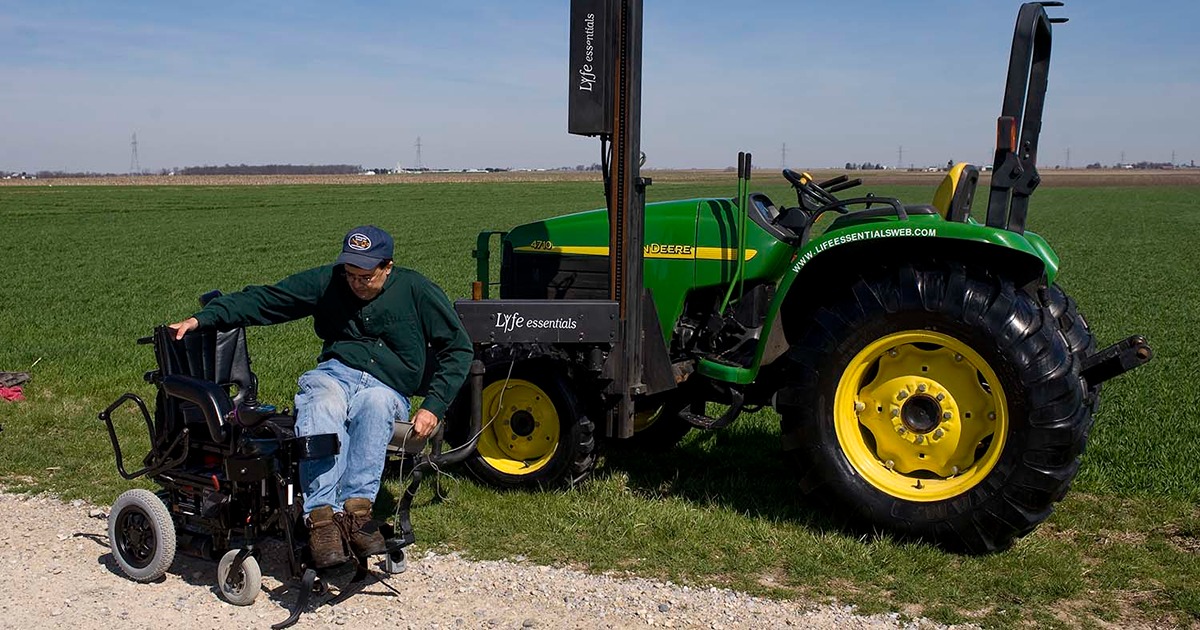
WEST LAFAYETTE, Ind. — The U.S. Department of Agriculture’s (USDA) AgrAbility...

WEST LAFAYETTE, Ind. — The Indiana Sheep and Wool Market Development Program (Indiana...