

Pollinators are Nature’s Workforce
Small wings, big impact. Pollinators are nature’s workforce, and it’s important we keep that workforce “employed,” because it’s estimated that one in every three bites of food we eat is due to cross-pollination by pollinators. The Pollinator Partnership promotes an annual Pollinator Week, slated for June 22-28 this year.
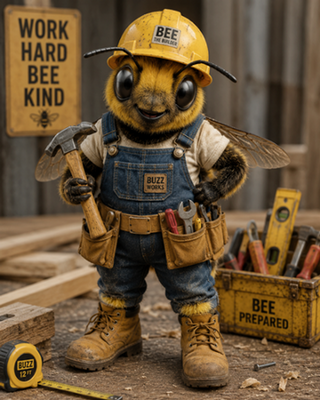
Above image generated by ChatGPT
In recent years, researchers have documented reduced populations of honey bees, bumble bees, and several butterfly and moth species. However, this knowledge has also prompted increased attention and efforts to conserve pollinators and build pollinator habitat.
There are several ways pollinators are important to us.
Pollination is important for maintaining genetic diversity in many plants and ensuring adequate fruit and seed production for crops, wildflowers, shrubs, and trees.
Pollinators also provide prey resources for other organisms, including migrating birds. Indiana’s pollinators include 430 species of bees, 144 species of butterflies, more than 2,000 species of moths, and many species of flower-visiting flies, wasps, ants, and beetles.
In addition to the traditional pollinating insects we think about, hummingbirds, bats, and small mammals also play a role in pollination.
Pollinators play a critical role in the production of many of our food products, but especially in fruits, vegetables, and nuts. In Indiana, apples, blueberries, cucumbers, melons, pumpkins, strawberries, peaches, blackberries, and raspberries depend on pollinators. Some other crops may not require pollinators, but they typically have better yields with them.
Of course, most people think primarily of the honey bee when pollinators are mentioned. For more information about honey bees, access the Purdue Extension publication, entitled "The Complex Life of the Honey Bee," available for purchase at the online Purdue Extension Education Store, https://edustore.purdue.edu.
Homeowners would benefit from the Purdue Extension publication, "Protecting Pollinators in Home Lawns and Landscapes." This publication highlights steps we can all take to reduce risk to pollinators, including: read and follow insecticide labels, use insecticides only when necessary, don’t treat areas where pollinators visit, avoid neonicotinoids on flowering trees, maintain buffers between lawns and flowering plants, and embrace alternatives.
Many home gardeners have elected to plant a pollinator garden to enhance habitat for pollinators. Others have installed mason bee hotels, left plant debris over winter, or used other methods that benefit native pollinators.
Find Purdue Extension’s resources on pollinator protection at the aforementioned Purdue Extension Education Store. The Indiana Department of Natural Resources also has a website dedicated to pollinator conservation at: https://www.in.gov/dnr/fish-and-wildlife/wildlife-resources/pollinator-conservation/. Finally, the Indiana State Department of Agriculture lists programs and initiatives promoting pollinator habitat at: https://www.in.gov/isda/programs-and-initiatives/pollinator-habitat/.
Find more information about Pollinator Week from the Pollinator Partnership at https://www.pollinator.org/pollinator-week.
Let’s all consider what we can do to enhance the conservation of pollinators.