

Uniting Indiana residents against invasive species
“I rely on Purdue and the Extension people for technical expertise.”
– Philip Marshall, forest health specialist,
Indiana Department of Natural Resources.
Purdue Extension has helped subdue invasive species ranging from kudzu and emerald ash borer to thousand canker disease and spongy moth. The work continues against new waves of invaders, such as tree of heaven and spotted lanternfly.
Aside from pushing out native species, spotted lanternfly presents an economic threat to Indiana’s forests, which annually provide $3.5 billion in value-added and $7.9 billion in value of shipments to Indiana's economy*, and its commercial vineyards, which contribute $2.4 billion annually**. Nationally, invasive species cost the U.S. an estimated $138 billion per year in damages, according to the Environmental Protection Agency.
Spotted lanternfly is an imminent risk to Monroe County. That’s largely because of the tree of heaven, which has established scattered populations throughout Indiana.
“The spotted lanternfly has arrived in Indiana, and the tree of heaven is its preferred food source,” says Ellen Jacquart, president of Monroe County Identify and Reduce Invasive Species. “Indeed, some recent research shows that spotted lanternflies may not be able to complete their metamorphosis into an adult if they don’t feed on the tree of heaven. So now we have this push to get rid of tree of heaven because the spotted lanternfly was just found two counties east of us.”
Jacquart has worked with Extension’s Robert Bruner, exotic forest pest specialist, and Lenny Farlee, sustaining hardwood specialist, to combat the pest and other invasives.
“Bob Bruner and his updates on spotted lanternfly have been awesome,” Jacquart says. “Lenny has become one of the highlight speakers at many of the invasive species conferences that I go to because he is so good at explaining control techniques. He brings in a lot of experience and knowledge, whether you’re working at the scale of a small yard or 40 acres.”
The Forest Pest Outreach and Survey Project (FPOSP) — a joint effort between Purdue Extension Entomology and the Indiana Department of Natural Resources (DNR) — has long addressed the growing problem of exotic pests through detection, education and reporting. FPOSP’s outreach includes educational and professional development programming. The project also seeks to create a group of citizen scientists motivated to help report and manage invasive species.
Bruner expanded this effort in 2023 by launching a series of live webinars called ReportINvasive. He also began providing in-person presentations at events such as the Indiana Green Expo, Indiana Invasive Species Conference and Cooperative Invasive Species Management Areas meetings.
The bulk of invasive plant work in forestry involves herbicide applications to control the intruders, says Philip Marshall, forest health specialist at the Indiana DNR. Extension specialists are among the speakers at the annual Forest Pesticide Training Program, which provides approved continuing education credits from the Office of the Indiana State Chemist. Extension presenters regularly share best practices and research with attendees, who often engage in invasive species management in various capacities.
I rely on Purdue and the Extension people for technical expertise.”
- Philip Marshall, forest health specialist, Indiana Department of Natural Resources
Marshall cites the value of the training program, as well as the Purdue Plant and Pest Diagnostic Lab, which helps county extension educators and other Indiana stakeholders identify invasive species and other plant and pest problems. An insect, a virus, a fungus or a plant can become an invasive pest or pathogen.
Marshall, Farlee and other experts from Purdue, Indiana DNR and elsewhere spoke in September at the 2025 Indiana Invasive Species Conference. Hosted by Extension and the Indiana Invasive Species Council, the conference catered to scientists, researchers, landscapers, landowners and concerned citizens alike.
Henry Quesada, Extension agriculture and natural resources program leader, delivered the keynote address. His topic: Ecological, social and economic consequences of invasive species on forests and forest products, the same reasons that drive Extension’s work forward.
Footnotes
*Data from the Indiana Department of Natural Resources
**Data from the Indiana Wine Grape Council
Program Impact
- Invasive species was the HIGHEST CONCERN REPORTED BY STAKEHOLDERS to ANR educators in their needs assessments during the 2024-2025 evaluation period. (Twenty-five educators reported it as the main concern.)
- TWO RECORDED WEBINARS on invasive species identification and management, available on the Forestry and Natural Resources Extension webpage, have garnered over 4,300 VIEWS COMBINED.
- EXTENSION HOSTS ABOUT 25 ONLINE REPORTINVASIVE PROGRAMS ANNUALLY, educating participants on invasives such as Asian bush honeysuckle and spotted lanternfly.
- 105 pesticide and natural resource specialists registered for the 2024 Forest Pesticide Training Program, which includes invasive species content from Extension.
Featured Stories

Purdue Extension’s Community Childcare team has been working with local providers to effect...

With an economic impact of more than $2 million, the Volunteer Income Tax Assistance (VITA)...
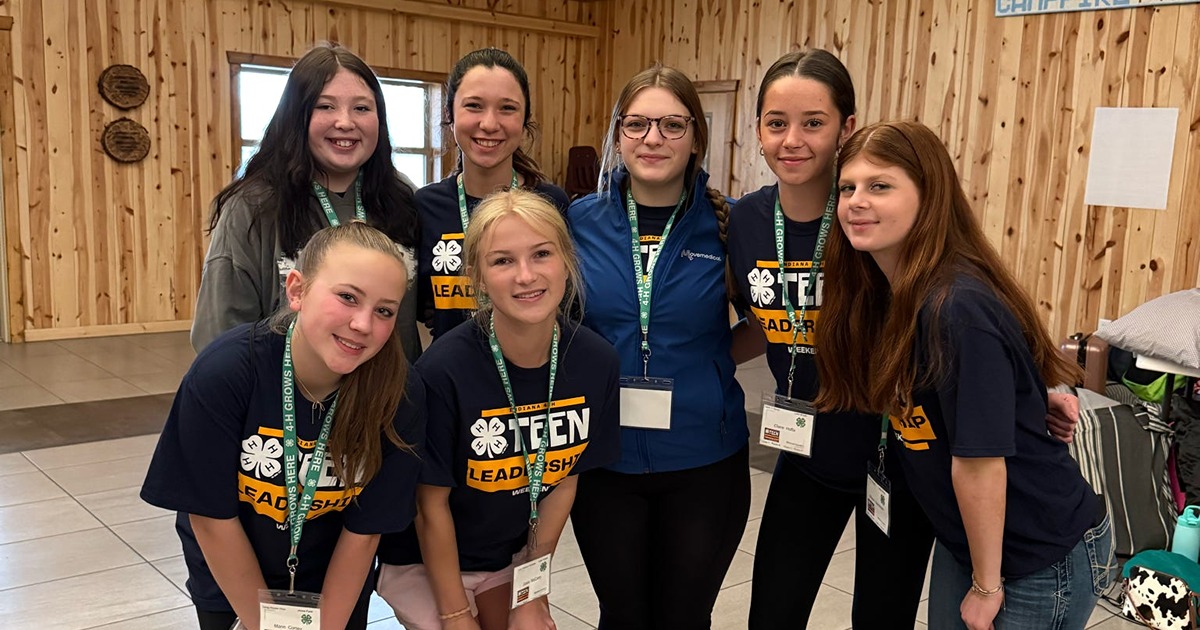
Since 1904, 4-H programs in all 92 Indiana counties have invested in and empowered...

When Terry Briscoe’s doctor recommended the Food Is Medicine program led by Purdue...
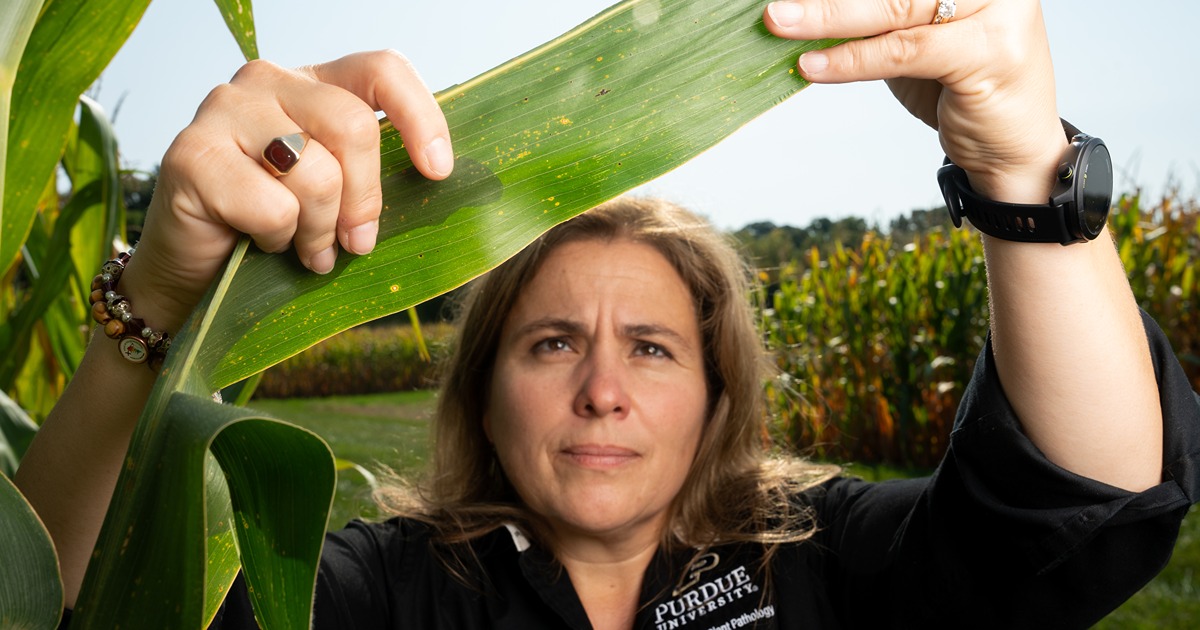
Tar spot looks innocuous at first, but the tiny black dots on leaves scattered across a cornfield...
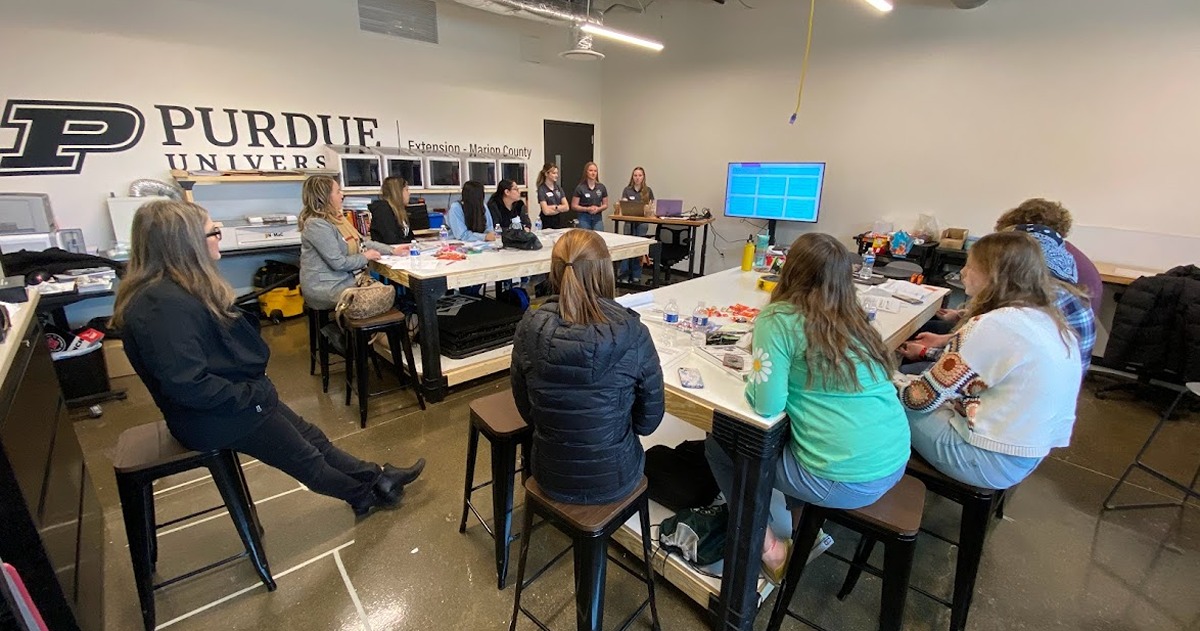
Tech Changemakers is at the heart of Purdue Extension’s 4-H Youth Development mission:...