

Saving one of Indiana’s top crops from tar spot
Tar spot looks innocuous at first, but the tiny black dots on leaves scattered across a cornfield can lead to significant yield losses — perhaps 60 bushels out of an average of 200 bushels produced per acre. For the average Indiana corn farmer, this could result in up to $65,000 in lost profits.*
The disease first appeared in Indiana in 2015 and caused widespread problems in 2018. Amy Alka, an agriculture and natural resources Extension educator in Randolph County, said her county’s farmers first found tar spot last year.
Since tar spot is such a new thing, I called Darcy Telenko at Purdue. Within 36 hours, she was here walking the fields with the corn producers,” Alka said. In that short time, Alka also organized an informational session with Darcy at her county’s fairgrounds and promoted it on social media and local radio. “We had 52 farmers show up."
Telenko is an associate professor in Purdue’s Department of Botany and Plant Pathology who studies field crop disease management. With 120 research trials supported by the U.S. Department of Agriculture and Indiana Corn Marketing Council on disease development, fungicides, times of application and variability between hybrids and weather conditions, her lab is at the forefront of understanding tar spot disease management.
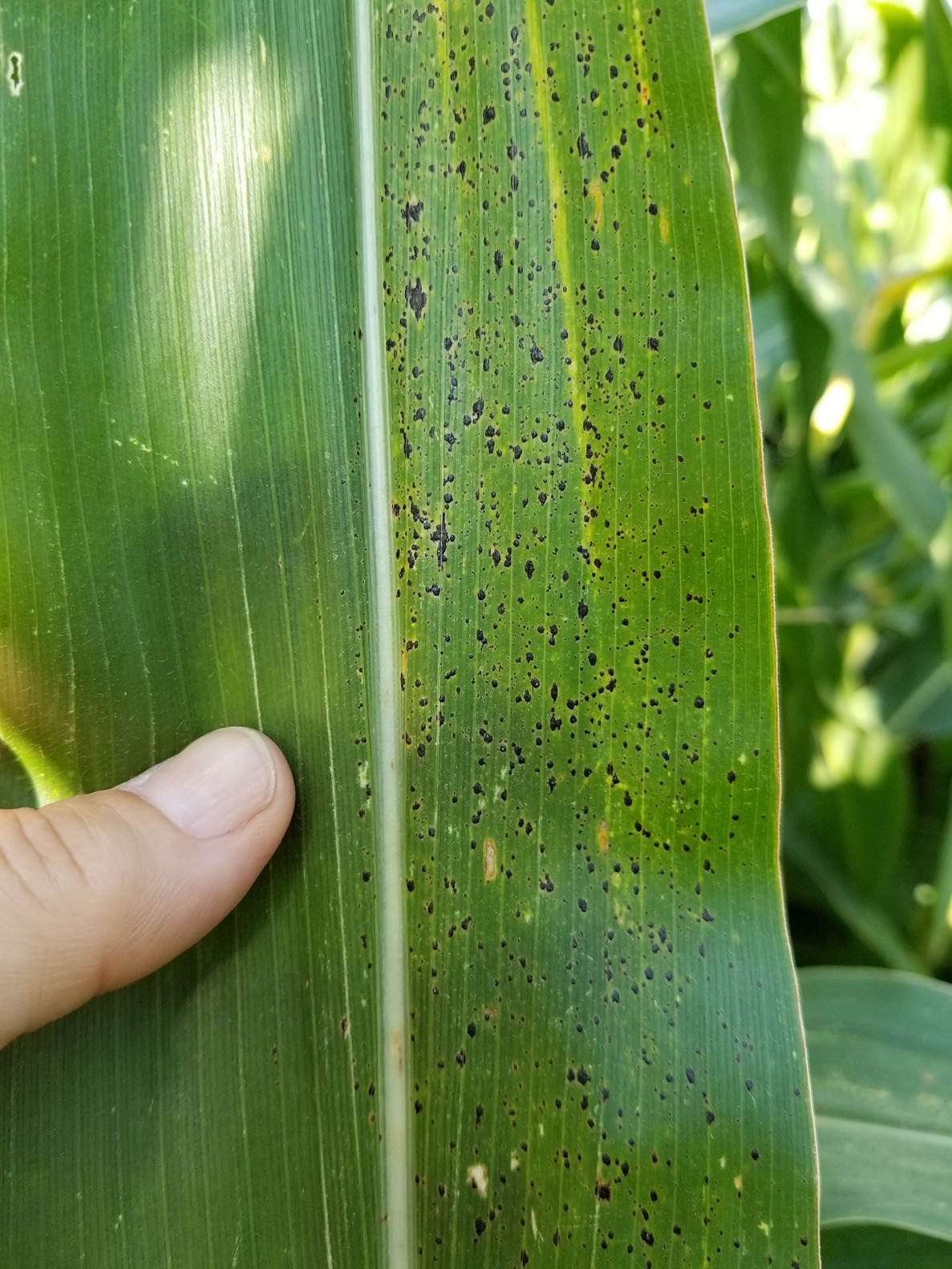 Telenko travels across Indiana and the nation to share research and tools, such as crop disease forecasting maps, with growers. Betsy Bower, a certified crop advisor, said Telenko’ s work “has allowed us to make time-sensitive decisions on when, how and why to treat or not to treat. The financial impact of protecting corn from tar spot on Indiana farms is in the tens of millions of dollars.”
The collaboration between Extension, Purdue faculty researchers and crop advisors is the key to farming’s future, said Thomas Lux, an Indiana grain farmer. “Research and Extension’s quick response to questions have made a real difference, especially in understanding the significance of this disease and suggested management practices backed by their research.”
For Telenko, being just a call away is a part of who she is. “I grew up on a farm and was a lifelong 4-H’er. Extension was always an important part of my life, and I saw where it influenced our lives for the better. My drive for my work comes from seeing that same impact on the grower.”
*Estimate based on the average Indiana farm size of 272 acres and a selling price of $4 per bushel of corn
Featured Stories

Purdue Extension’s Community Childcare team has been working with local providers to effect...

With an economic impact of more than $2 million, the Volunteer Income Tax Assistance (VITA)...
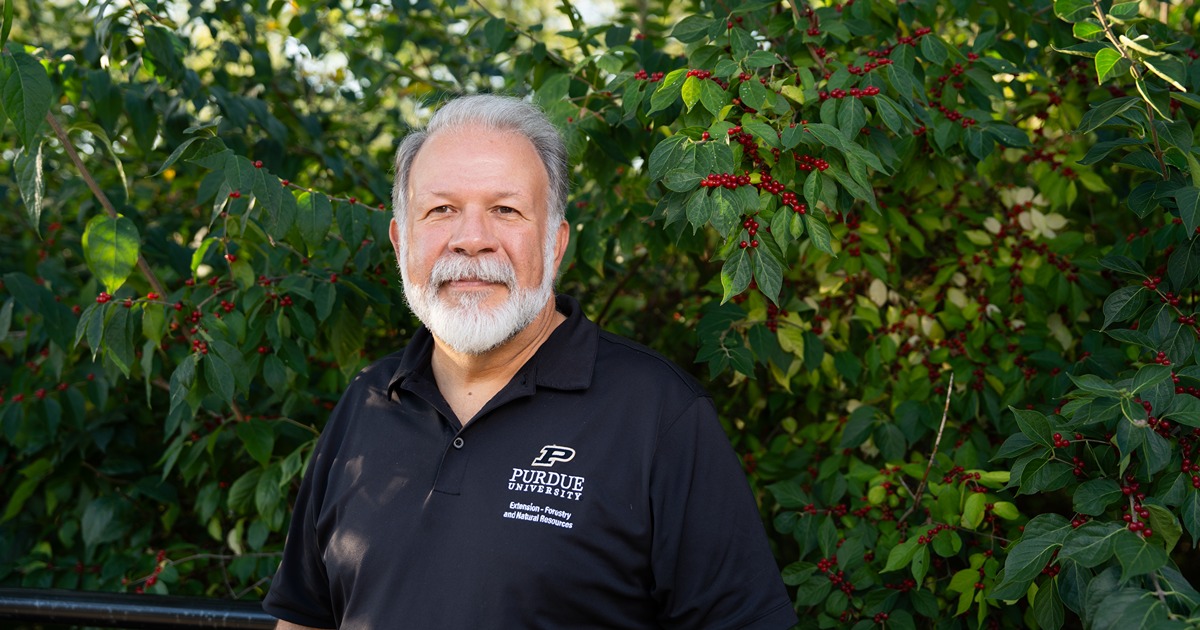
Purdue Extension has helped subdue invasive species ranging from kudzu and emerald ash borer to...

Since 1904, 4-H programs in all 92 Indiana counties have invested in and empowered...

When Terry Briscoe’s doctor recommended the Food Is Medicine program led by Purdue...
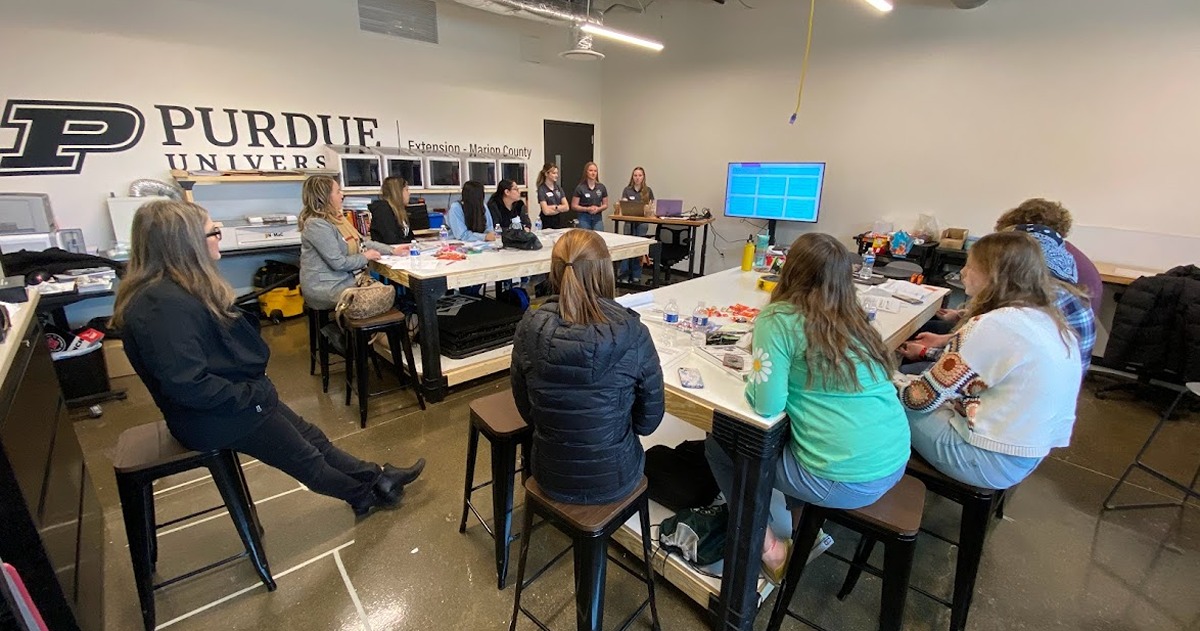
Tech Changemakers is at the heart of Purdue Extension’s 4-H Youth Development mission:...