

February Announcements
February Announcements
From the Director
February 27, 2026
Regional Teams Update
By: Angie Abbott, associate dean and director of Purdue Extension
The Extension Transformation continues to take shape in the East Central and West Central Regional Teams. We will be giving monthly progress updates to share the strategies regional field offices are testing as we navigate this transition together.
People can now follow along with what’s being offered in their region through two new Regional Teams Facebook pages: @Purdue Extension East Central Region and @Purdue Extension West Central Region.
Our goals for these pages are to centralize regional communications efforts, increase community awareness of Extension, and reduce staff workload. Please follow these pages on your county Extension accounts, like and share to support our regional marketing efforts.
Counties within the regional teams will transition away from using their individual county websites as the primary hub for health and human sciences (HHS), agriculture and natural resources (ANR) and community development (CD) programming. Instead, each region will launch a dedicated Regional Teams webpage that reflects the updated Extension structure and showcases regional events, relevant news and shared program offerings across HHS, ANR and CD.
Users in counties that are part of a region will first land on a broad Regional Teams landing page outlining the current regional structure. After selecting a specific region (for example, East Central Region), users will be directed to that region’s homepage. The regional homepage will serve as a centralized hub of information and provide navigation options to either individual county webpages within the region or one of the shared program area pages.
County websites will continue to exist but will be more streamlined, as these three program areas will move to the regional webpages. 4-H youth development will remain housed within county websites at this time.
Audiences and stakeholders will more clearly see the benefits of programming delivered across a broader geographic footprint, while regional team members will share responsibility for content creation, webpage management, and event promotion. Shared resources and programming will naturally lead to shared communication efforts.
By: Amanda Graupner, regional educator
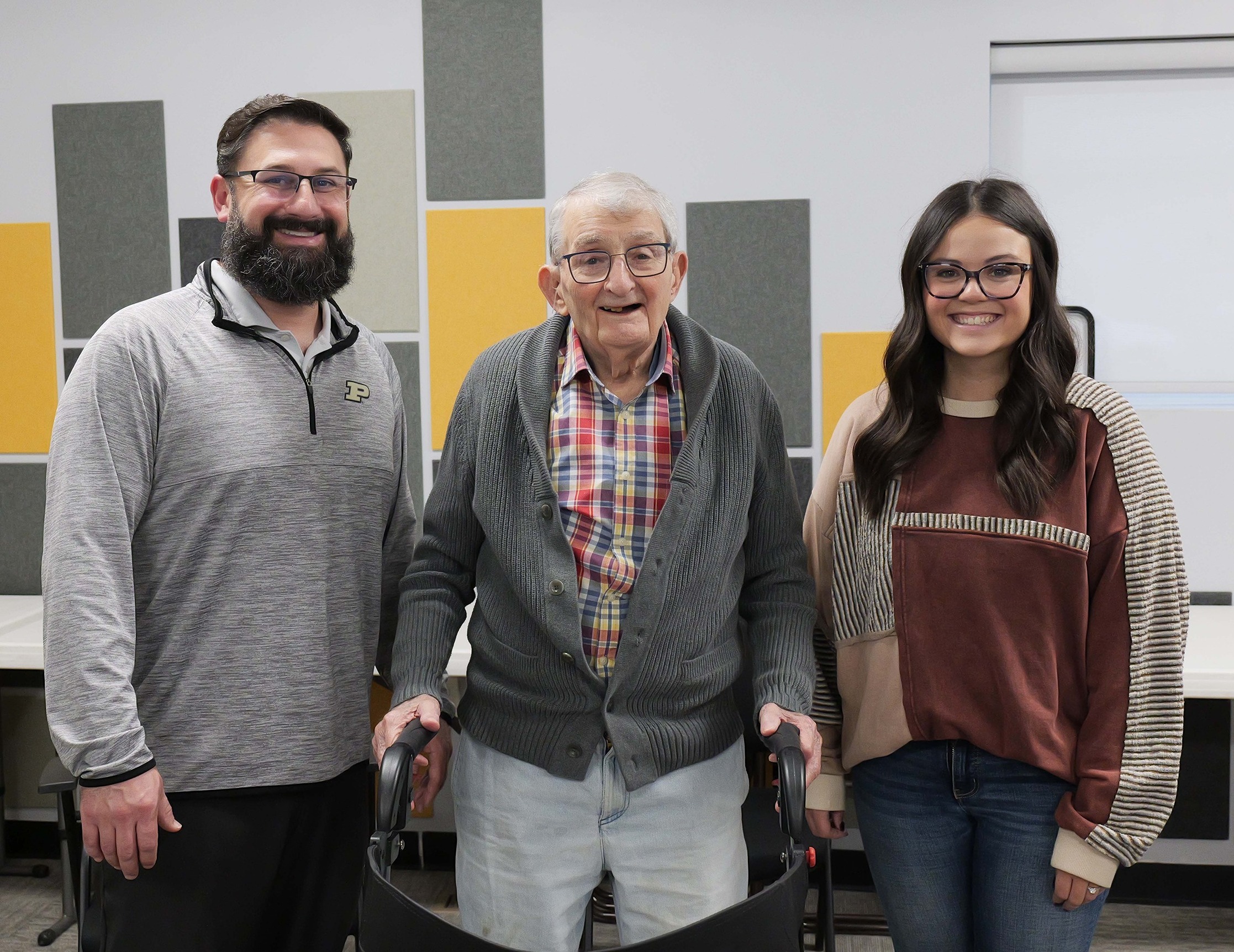 The regional model has opened new doors for collaboration and expanded access to Purdue Extension programming across the West Central region. For regional health and human sciences educators Brock Turner and Ashlee Merryman, this shift has created opportunities to strengthen partnerships, broaden reach and deliver meaningful impact to more communities.
Having worked together for four years, Brock and Ashlee continue to grow as a team, supporting one another, stepping in where needed and developing new and engaging programming for the region. Their partnership has been especially meaningful during the transition to the regional model, allowing them to navigate change together while expanding services into new communities.
One program that has played a key role in this expansion is A Matter of Balance. The class has gained strong interest in Warren County and neighboring communities. As the program’s presence has grown, so has its impact.
Beyond fall prevention education, the program fosters meaningful relationships. Participants form connections with one another, share personal experiences and build trust with educators, creating a supportive environment that often leads to continued participation in Extension programs. These relationships also encourage word-of-mouth outreach, helping bring new participants into future classes.
One recent class offered a powerful example of the program’s reach and influence. Bill, a 96-year-old Warren County native, attended every session with support from his family and brought a unique perspective, serving as a source of inspiration for the entire group.
“He showed everyone that learning never stops,” Brock and Ashlee said. “When others questioned their ability, seeing him participate helped them realize they could do it too.”
Brock and Ashlee’s collaboration, adaptability and shared commitment to community health exemplify how a regional approach is strengthening Extension’s reach and creating new opportunities for impact across the West Central region.
By: Molly Hunt, area director
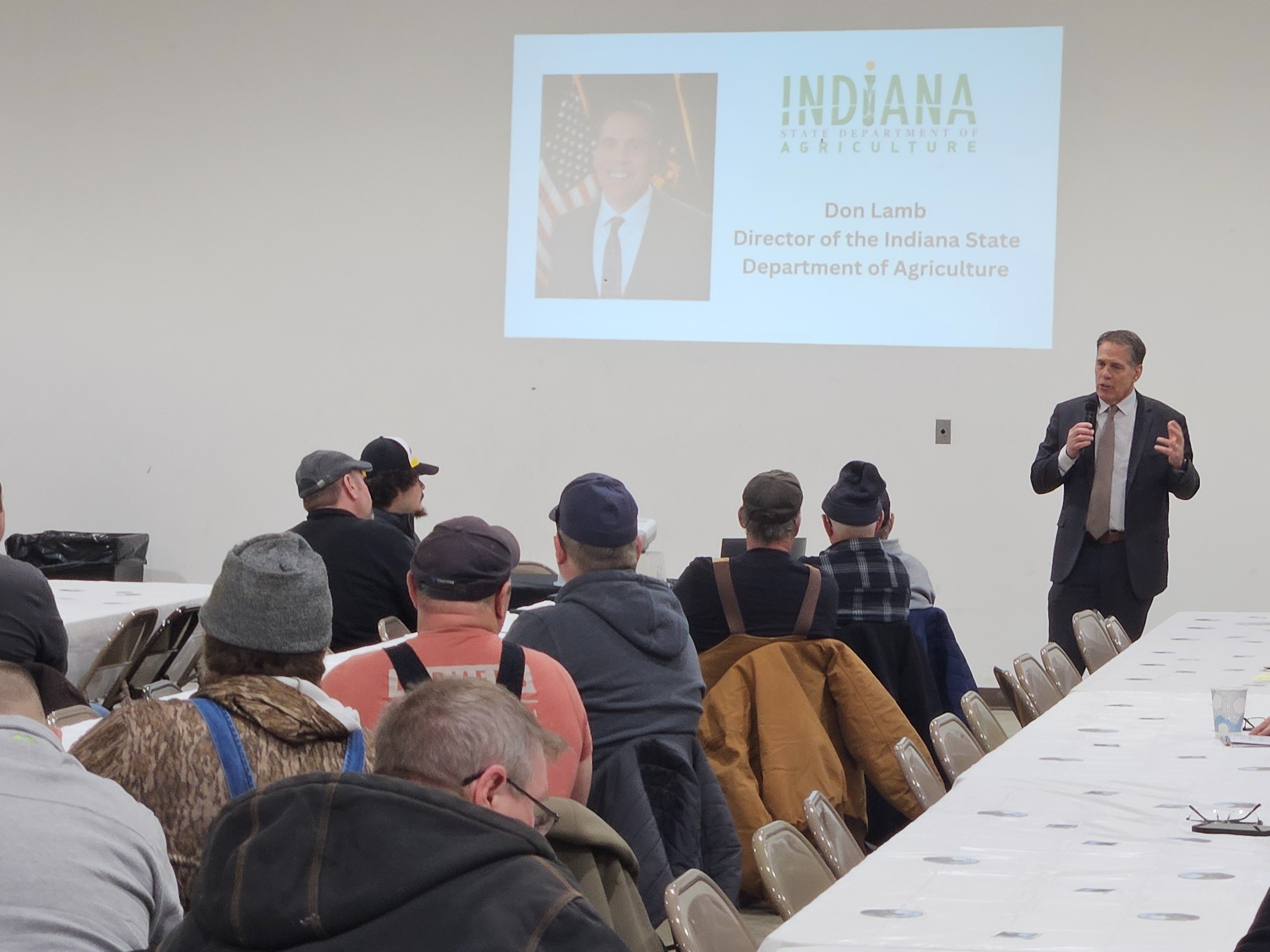 The 2026 Agriculture Outlook, an event focused on commercial agriculture, drew over 100 registrants from multiple counties and states to the East Central Regional Team on Jan. 27. Despite a snowstorm making travel difficult, over 65 people attended, which was three times more than in years past.
The event featured speakers who specialize in commercial agriculture. The line-up included not only Purdue Extension specialists but also speakers from partner organizations, like Don Lamb from the Indiana State Department of Agriculture, Katie Nelson from Indiana Farm Bureau and Howard Halderman from Halderman Companies. These selections showcased Extension’s network of partners across the state. Chad Fiechter from the Purdue Center for Commercial Agriculture also spoke, which increased participant awareness of Extension’s strong connections between field offices and campus, particularly with the Center for Commercial Agriculture.
Having focused, specialized staffing has educators to deliver deeper, higher-quality programs like this event. One attendee said, “I am so glad Purdue is getting back to Commercial Ag.” This example shows how communities highly value specialist over generalist content and how the event positively shaped public perceptions of Extension in the East Central Regional Team.
In the future, programming in the East Central Region will continue to be responsive to community needs and feedback, and we plan to continue expanding educational offerings through a regional delivery model.
As we continue to develop strategies to deliver programs regionally, we are focusing on broader reach, depth of expertise, reduced duplication, applied research, innovation and continued service for communities. Stay tuned for updates on the transformation in the next newsletter.
If you have any questions about the Transformation, please email ExtensionTransformation@purdue.edu, and your question will be sent to the appropriate department.
Social media publish checklist
Before you hit publish, ask:
- Is the audience clear?
- Is the Extension connection obvious?
- Are logos, fonts and colors on-brand?
- Is there a clear action (register, attend, learn more)?
Following these steps will increase audience reach and engagement and emphasize Extension’s connection to Purdue University and its resources.
Looking for inspiration? Learn about Purdue’s fonts and colors on Purdue Brand Studio’s website, and check out the 140+ social media templates available on Marq.
Need help? The Communications Committee can offer support and review materials before you post. Please reach out to Olivia De Young at odeyoung@purdue.edu with any questions, and she will direct them to the right people.
Quick fix
When was the last time you updated your email signature? In less than 10 minutes, you can create a new signature with Purdue Brand Studio’s email signature generator. Here’s an example with the Extension co-brand:
John Smith
Health and Human Sciences regional educator
Purdue Extension - Serving East Central Indiana
1200 S Main Street
Tipton, IN 46072
o: 765-675-1177, Ext. 123
ADA Compliancy in Cascade
By: Lily Thill, digital communications coordinator
As the April 24th deadline approaches for all digital materials to meet ADA compliance, it’s important to review your communications and take the necessary steps in Cascade to ensure accessibility. Below is a summary of what we’ve been doing and recommendations to help you stay on track.
Please note that there are new steps that must be taken by those posting YouTube videos and Podcasts into Cascade. Audio descriptions are required for the Responsive Video block in Cascade while transcripts are required for the Podcast Embed block in Cascade.
Thank you for your continued efforts to make our digital content accessible to all audiences. Your attention to these steps helps ensure compliance and improves the user experience for everyone.
Files that aren’t linked anywhere on your site and aren’t being used by the public have been removed. Many counties hadn’t removed these files, so we did it for you. This step is completed.
We reached out to Gina Price for a list of frequently visited documents. On Feb. 16, I shared this list with all counties. If a document has already been removed because it was outdated, that’s fine. This list simply helps identify what your audience is actively using. You can either update the content or turn it into a webpage for easier access.
For assistance with how to remedy a PDF to be ADA Compliant, please reach out to Eric Imboden, eimboden@purdue.edu.
For assistance with turning a document into a webpage, please contact me at morrislc@purdue.edu or reference this video as you work through your page. Please note that webpages can be simple and may not require a banner or an introduction.
ADA resources and training videos are available on the Hub under the Communications tab.
Embeds display content from another platform directly on a page rather than linking to it. Examples include Qualtrics forms, Marq or Canva embeds, RSS feeds, Google Calendars, Google Slides, CVENT widgets, Google Events, Google Maps, QR codes, and tables. Please remove these from your webpages as soon as possible.
Once a document is remediated or recreated, add a note at the bottom stating it is ADA-compliant, include the name of the person who completed it, and save the file with the suffix “-ada-508” before the extension (example: document-name-ada-508.pdf).
When you embed a video on a Purdue webpage, you must include a transcript on the page or link to one that we host. Embedded players don’t provide enough information for blind or low-vision users, so a transcript ensures they can access everything including spoken words, important sounds, and key visual details.
If the video includes important visuals that aren’t explained out loud, you’ll also need an audio description. If everything is already clearly described by the speaker, then you’re covered.
A YouTube auto-generated transcript does not count. The transcript must be something Purdue hosts and maintains.
For podcasts, use the new Embed block in Cascade. You can embed from Spotify, and the written transcript field is required to help you stay compliant.
The Cascade video blocks will soon be updated to include the transcript requirement.
Transcript options:
Downloadable text file
Link to a transcript page on your site
Expandable transcript section on the page
Adobe Premeire can be used to create transcript files for Podcasts.
Audio description options:
Link to a separate described version hosted on your site
Built-in toggleable audio descriptions
Burned-in audio descriptions that are always on
- Avoid uploading event fliers. All event information should be entered in Extension-events; this avoids duplicating content and extra accessibility adjustments.
- Consider converting heavily accessed PDFs into webpages. Provide an email for users to request a PDF if needed. A training video is available to guide you.
- For newsletters: create in Word without graphics, copy/paste plain text into Extension-News, then enhance the Word version for print. This keeps digital distribution simple and accessible.
- Avoid adding Canva-created images directly into Cascade, as these often include text and fall outside Purdue branding.
You can find ADA resources on the Hub under the Communications tab, including FAQs, recorded trainings, brand colors and more. Helpful external resources include:
PDC Resources
By: Steve McKinley, staff development specialist
As we move toward ADA compliance, a number of updates have been made to the Professional Development Conference (PDC) website.
Links to resources from the 2023 and 2024 conference have been removed and all files moved to a Box folder. If files were shared by presenters for their concurrent sessions, those session names are now in bold font on the website. If you are interested in any of those resources, you can e-mail me (mckinles@purdue.edu), and I’ll be happy to forward them to you.
The same procedure will be followed for those resources shared by presenters at PDC 2025. In early April, I will remove the links to the sessions from the website, and you will be able to access the files via e-mail with me. If you have resources that you’d like before then, please feel free to download them from the website in the next few weeks.
Purdue Day of Giving
By: Lily Thill, digital communications coordinator
Purdue Day of Giving takes place April 29th and offers a 24-hour opportunity to support programs across the university.
Through Purdue Extension, counties and units can participate and raise funds that stay local. All dollars raised by your county go directly back to your county to support local programming and priorities. As in previous years, the top 10 fundraising counties will receive bonus funds.
Counties are encouraged to begin planning outreach efforts now! Consider how funds would be used, identify key supporters to contact, and outline your communication strategy leading up to and during the event.
Resources are available on the Hub’s Purdue Day of Giving webpage (located in Quick Links, and under the Communications tab). Materials include logos, challenge information, suggested posts and stock images, and important links. Make sure to check this page as more assets are released. County links will not be distributed until April.
To receive donor information after the event, at least one person in your county must complete the Faculty and Staff Confidential Certification. Your county donor lists will be available in June and will be shared only via Filelocker with those who have signed the Faculty and Staff Confidential Certification. Extension staff will need to state the county they are based in within the job description placeholder and list Alyssa Crawford, PDOG stewardship, as the contact and project. Please note that Filelocker deletes items after 30 days; all county donor lists will need to be downloaded within this time frame upon receiving them.
Purdue Extension Podcast
More about our latest Extension updates
News from the directorMore about our latest Extension updates
News from the director